
Compressed Biogas Is Finally Flowing Into India’s City Gas Networks
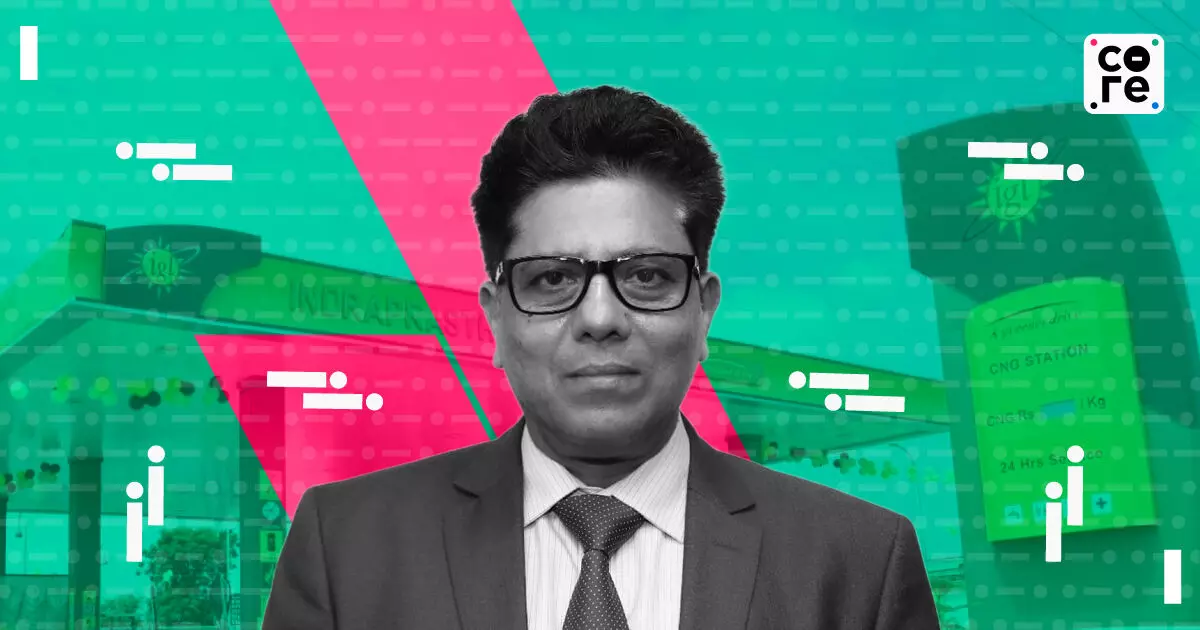
In this episode of India Energy Week, Govindraj Ethiraj speaks with Kamal Kishore Chatiwal, managing director, Indraprastha Gas Limited that after years of policy push, producers are focusing on gas quality, allowing CBG to be blended seamlessly into CGD systems.
NOTE: This transcript contains the host's monologue and includes interview transcripts by a machine. Human eyes have gone through the script but there might still be errors in some of the text, so please refer to the audio in case you need to clarify any part. If you want to get in touch regarding any feedback, you can drop us a message on [email protected].
Mr. Chatiwal, thank you so much for joining me. So, before I start off, let me ask you a little bit about Indraprastha Gas or IGL as it's called today, in a broad sense. I mean, you know, when, what's the company like, where all are you present, where do you distribute and what is the sort of intensity, where are you kind of bigger, where are you smaller and so on.
Thank you, Govind, for this opportunity. IGL, as you know, today is the largest CGD company in the country and we have close to around 23-24% total volume sold in CGDs through IGL. So, we are present in 12 geographical areas.
You know, India is divided into 307. So, we are present in 12 and those 12 are, I mean, we started 26 years back. So, one of the early CGD entities, so that's the advantage with IGL that we have more than 25-26 years of experience and we have built a robust network.
If you compare our network, close to 30,000 kilometres of pipeline, both steel and MDP, close to 1,000 CNG stations, we'll be touching 1,000 very shortly, 5,000 INC customers. So, entire NCR region, you know, most of the NCR, major towns, Delhi, Gurugram, a few zones of those areas, Noida, Ghaziabad and part of Faridabad also is assigned to us. So, this is a major, I would say NCR is not one city, but it's a cluster of six, seven major cities and major industrial cities and that's the advantage that IGL has.
And due to that, we have been able to, I mean, demonstrate our capability, technical capability and all. And one of the biggest strength, I would say, is the domestic connections that we have. You know, we have close to 30 to 33 lakhs, one of the highest in the industry.
And as you know, I mean, domestic PNG is not very, very lucrative, but we have been able to turn it around, you know, in the sense that there is an initial pain when you do domestic connections, but once you have laid the network, you can reap the benefits. And that's the biggest monopolistic advantage. And with our customer focus and our network strength, we have been able to, I mean, satisfy our customers.
And we find that now, especially in Delhi, the public representatives are coming to IGL with request that to bring it to other, you know, technically non-feasible areas also that you find out a solution and give us the connection there. So, in a nutshell, now we are into expanding beyond Delhi NCR. So, we have some of the rural areas, just in Haryana, we have Rewadi, other than Gurugram, we have Rewadi, Karnal and Kaitham.
And in UP, we have Meerut, Muzaffarnagar, Shamli in the western part. Then we have Kanpur, Chitrakoot, Mahoba, Hamirpur, Banda. These are some of the Bundelkhand region, you know, some of the very, very developing regions of the country.
And if we are able to promote, I mean, gas-based economy in those regions, that will be remarkable for India, because we feel that gas has some inherent advantage in the sense that the domestic production, not only the domestic production, but also the biogas space, compressed biogas, waste-to-energy, waste-to-gas, these projects can be easily integrated with the existing network. So, that's the biggest strength, I would say.
And I'm going to come to the integration of compressed biogas also in a moment. But broadly, from a top-line point of view, how big is the gas that, let's say, powers two wheelers, sorry, four wheelers, and two wheelers too, but four wheelers is a much bigger one, versus retail at homes?
You see, over 75% sales is in CMG segment, because that's the major volumes is going over there. 8 to 10% is, you know, domestic sales. So, out of, we sell close to 10 million, if you say, I mean, we'll be exiting 10 million in the fourth quarter.
So, if we look at 10 million, so you can say 7.5 is the CMG, 1 million would be domestic, and the rest would be INC and other sales, bulk sales.
So, most of the gas is driving mobility right now, not combustion in homes at this point? Yes. Okay.
Now, let me ask you about the mobility part. What's changed in the last few years, or the last decade or so, that we've been seeing? I know that capacity was always a constraint.
So, you've never had a demand problem, or rather you only had a supply problem. But supply has now improved, but demand also continues to grow.
I think in the initial days, it was very, very difficult for IGL to convince the customers to switch, because there are many myths around the fuel that, you know, it doesn't have the power, if you go into the flyovers, it will, you will not be able to climb or something like that. We go to the hill station, the car will not move. So, all those myths over the years, plus the kit have also improved.
Now, people have realised that there is a huge, huge advantage, because customers, you know, they don't realise the advantage of sustainability, environment, they're more concerned with the economics. So, we have been able to demonstrate both the advantages, you know, the sustainability point of view that, you know, it is 30% less emission in terms of CO2. So, that is a proven technical strength.
Second is the economic advantage, you know, still the fuel is 40 to 50%, running cost is 40 to 50% cheaper. So, this advantage, I would say, has been a strength of IGL also, because we are one of the lowest, you know, MRP or the retail price of CNG is the lowest in the country in Delhi. So, it's around 77, Bombay is around 80 and other Gujarat also 80, 81 kind of thing.
So, you can see the advantage and that, I think, has been that we have been able to push the electric bandwagon also to some extent, we have been able to stop, especially in the three-wheeler segment, we have seen that wherever the CNG prices are high, there the penetration of electric is more, but 77, 78, we feel, has been able to push the electric three-wheeler segment, plus car, you know, continues to be very, very, because NCR, the mobility is high, the passenger mobility is very, very high, people commute far distances. So, per day running is a little higher and there the economics, because if we can give 40 to 50% economic advantage, so that is very, very good. So, with that, we've seen in some of the months, we find that the CNG sales, the total conversion plus the new vehicle sale is more than petrol and diesel also.
And then we come to that. So, when you talk about, you know, the early days when let's say you had to convince people to buy it, but clearly now we are well past that. And it's, like I said, I think cars are still lining up outside CNG pumps, maybe not as much as a few years ago, but are lining up basically to fill up.
Yes. So, that has been our, I would say that it is our vision of IGL to make queue-less stations, that whenever a CNG vehicle is there, that you find that one or two dispensers are vacant and they can go and straight away fill that instead of queuing up. Now, the queue time has drastically reduced from the earlier, say, half an hour or so to 2, 3, 5 minutes, you know, you get a, and that is because the number of CNG stations, especially in Delhi, is much more than the petrol and diesel outlets.
So, we have around 500 stations in Delhi, petrol and diesel is dispensed at around 400. So, this is the only city in the country where, you know, the CNG stations are more. And in the existing CNG stations also, what we are doing is increasing the dispensing capacity.
Wherever we find the space, we are finding up new and innovative ways that we can increase the dispensing outlets, so that the number of points are more and the queue can be reduced.
So, when you say there are more CNG stations, so most CNG stations are also riding on existing petrol and diesel. Yes. So, what you mean is there are 100 more stations which are standalone or?
200 are our own, I mean, IGL station and 300 we have the existing OMC outlets where we have CNG facility. But across the city, you know, 500 outlets are there where you can find CNG. Interesting.
So, tell us about the fuel side. So, and in the context of demand. So, we have seen electrification happening and accelerating, particularly two wheelers and three wheelers in the last few years.
We've also seen, let's say, more efficient petrol and diesel. And of course, we've seen gas flowing. So, what's happening there in terms of the demand supply dynamics from them, particularly from the consumer side?
You see, when we say CNG, we find that it is a, you know, the middle class fuel, you can say. So, the two things we are observing that in the high end segment, you see, 25-30 lakh plus category, there the electrification or the competition in the electric is which is happening more there. Whereas in this segment, you know, our highest model is Grand Vitara Maruti 15-20 lakhs.
So, up to that point, you know, the entry level to 15-20 lakhs, there, you know, the people are still preferring CNG. Now, one of the things could be that the initial cost, you know, the capital cost is slightly higher in case of electric. And this segment is more, you know, the capital cost sensitive, very, very sensitive to all those things.
So, that is the reason we feel that and the running cost, you know, in electric and this is minor difference is there. So, we are at, say, if I take an entry level vehicle, we are at, say, 3 rupees running cost, as against petrol 6 rupees and the electric could be one and a half, 2 rupees. So, the difference is not much, whereas the capital cost is 30-40% higher in case of electric vehicle, that may be there.
In two-wheeler segment, we are finding that the electrification is there. So, you can say that the two-wheeler segment or the low capacity segment, as well as the high-end petrol-diesel variants, there the electric has penetrated.
So, you are saying the middle segment CNG has a very strong grip? Yes, and is growing. And if CNG is growing, it is growing because it is eating into petrol and diesel.
No, there are two things. One is that the entire shift from two-wheeler to four-wheeler, the affordability and all those factors and the growth in India. So, 10-12, 8-10% growth is there.
So, one is that the new additions or the new growth and the second is the conversion from petrol to CNG. Now, CNG has an advantage that you can have both the fuels, that you can run on petrol also as well as on CNG also and the running cost comes down. So, earlier in the initial days, say 10 years back, we were finding that people are a little hesitant because they were apprehensive that once you go out of Delhi or NCR, you may not find stations.
Now, that is not the case now. In the last 5 years, we have seen that number of stations now close to 9,000. Earlier, there were 3-4,000 stations and that to a few pockets.
Now, everywhere because now all the authorisations have been completed and CNG, less capital intensive. So, people go first, all the CED entities, they first go to the CNG space. So, they are setting up CNG stations.
So, now that issue is not there. So, with that, the customer anxiety with respect to the stations, so that has gone away. So, people are preferring that okay, running cost is low.
It is very easy to convince anybody that okay, your running cost will come down. We need not tell him anything.
So, and the other thing you were telling me is that the quality of kits has improved. So, I am assuming that means more efficiency, better quality of combustion and safety.
Yes, yes. So, that has been also one of the plus that as compared to the initial kits. Now, the kits are much more improved.
They are more indigenisation has been done. So, the cost has also come down plus the efficiency, safety, all those factors have improved. Plus now, the mandate is also there that every 3 years, we have to do hydro test of the cylinders.
So, cylinder health is also there, the life of cylinder is fixed. So, with these factors, I think overall the CNG efficiency, the mileage, the power, everything has improved drastically.
I am going to come back to retail and distribution in a moment. But tell us a little bit about the sourcing side. I mean, how are you seeing gas supplies, gas prices, particularly with everything that is happening around the world right now?
You see now, the differentiating factors for the CED entities would be how you source the gas. Unlike earlier when the 100% was given, you need not do anything on that front. And that is where I think IGL, I am happy to inform you that we are the largest consumer of RLNG in the country outside of the subsidised space of fertiliser and other.
So, we are the largest, I mean, other than the captive use, we are the largest consumer of RLNG. So, that gives us a very, very distinct advantage that with the kind of volume, we are able to get very good deals in the market. And what we are seeing is that going forward, the APM gas is going down.
So, that may be replaced with new oil gas. But still, it is going down and the reliance on imported gas is going to increase. Some part would be made up by the CBG or the renewable natural gas.
But the percentage is going to increase. If we say IGL, we are currently at 50-50. You can say the 50% is domestically produced gas we are using and 50% is imported component in our portfolio.
So, that is going to maybe shift to 60-40 or 60% RLNG or something like that. Slowly, every year we are finding that the domestic fields are reducing. So, and the cut is there on the APM allocation and all those.
So, that is going to continue in 3-4 years. But we have to learn that going forward, as in when the opportunity arises, we have to secure RLNG and we find that we are confident that we will be able to source gas at new oil gas price that is 12% of crude. So, that is the new oil gas price as of now.
So, that we are confident that below that we will be able to source RLNG. The trend that we see in the market as of now.
And today, when you say that you are sourcing both domestically and globally, that is you said 50-50. So, where all is this gas coming from typically? So, I mean, I am saying physically which pipelines and where does it come from to Delhi or NCG?
Delhi, you know that the source is only Dahej and HPGA that is the major source to Delhi. So, that is the route and from Gales network we are taking gas and RLNG we have both Henry Hub as well as the Brantley contracts, JKM also some part and number of suppliers are there, but majority from Gale and BBCL. Then domestically, you know, APM is again coming through HPGA pipeline and new oil gas some from Andhra fields and some from Bombay high.
So, that we are getting. And all of this is happening every day? No, actually allocation is quarterly.
So, minor adjustments are on fortnightly basis. So, we get a sense that, but we would like that it to be a longer term, you know, instead of, you know, every fortnight or every quarter we have to make adjustments. If we get a picture that, okay, what next one year this will be my APM allocation, new oil gas allocation and then I know that for next one year I have to source this much quantity of RLNG.
So, that is, I think that is our wish list, but presently, you know, the quarterly is how it is being done. And maybe if there is a drastic change, then fortnightly also sometimes we feel minor tweaking is there.
Right. And you talked about or touched upon compressed biogas as being blended with this gas. So, we have been hearing that a lot of investment has gone in or beginning to go in the budgets, union budgets, I think for three years now have been talking about it or talked about it three years ago.
So, how is that playing out?
I think now that is the big story that the Prime Minister's vision of making India gas-based. So, this is an important, I think, component of that. So, initially, you know, the people were not focussing on the quality of gas, they were only focussing on the specification.
But if you have to use it into the CGD networks or the steel network or for mobility, the quality has to be ensured. So, now the realisation has come among the producers that we have to focus more on the quality. And once that is done, so this gas can be seamlessly used in the CGD entities.
And even IGL is innovating on that front that I am happy to share that one of our GAs is running purely on domestic gas, be it the domestic gas or the CBG. And it is surplus rather. In that GA, the gas is surplus, the CBG is surplus.
So, you are saying in this particular town or region, it is entirely…
Completely domestic, that APM, new oil gas is coming from domestic sources plus the CBG. The balance is made of so, we have been able to replace RLNG with CBG.
Okay. And that percentage would be roughly?
No, that is a small GA that we sell around say 0.3 lakhs, 30,000. So, that 30,000 earlier 15,000 was being sourced from RLNG. So, that we have been able to replace with CBG.
In fact, it is more than that our requirement. So, now we will be exporting that CBG to some other GA. So, we have the pipeline network, we will be injecting into pipeline and using it somewhere else.
And when you say that this has to become more efficient, that CBG has to become more efficient, and I guess what you mean is it should have the combustion properties of…
No, I did not mean that. Actually, the molecule is the same. It is the methane molecule in both natural gas as well as the renewable natural gas.
The other impurities, the impurities like moisture, H2S, oxygen, so these are the three critical impurities. Now, earlier people were focussing on CO2. Now, CO2 is an inert component.
Other than reducing the calorific value, it has no detrimental effect and maybe the environmental impact of releasing that CO2. But if these three impurities that I told hydrogen, oxygen and moisture, if they are present and they can have a detrimental effect on the pipeline network. So, that is not complying with the PNGRB specification.
Now, people are realising give me the PNGRB specification gas and they are focussing on reducing all these impurities. They are putting up purifying equipments to make it compliant. So, now once that is done, this gas is same as the natural gas.
And do you have your own compressed biogas setups or installations or are you buying it from others?
It is a mix of both that we are planning to set up 10 of our own. I mean, the ministry has also mandated us to set up 10. So, that we are doing.
In addition to that, the sourcing is also there. Now, one of the advantages of IGL is that we are in an area, the western UP, which is the sugar belt of India, I can say that. And so, that is a very, very big advantage that you can easily take that gas and use it into your network.
So, the mandate is for 5%, but we are targeting 10%. 5% of your domestic and should come from CBG by 2030, but we are targeting to maybe around 10% of that.
And when you say sugar, so I would think of sugar for sugar and sugar for ethanol. So, the same plants produce…
No, no. Actually, this is press mud, which was earlier a headache for sugar factories because they were finding it very difficult to dispose. So, that is the leftover residue.
Once you make sugar, you make alcohol. Once you make alcohol, that is called spelt wash and this is press mud. So, both of them were headaches for, I mean, they used to lay on the ground and let it evaporate and the area would be swelling and everything would be there.
Now, we are using that to make compressed biogas. So, there is no environmental pollution, nothing is there. And whatever is left after that is fermented organic manure that you can again use in your…
So, that is the kind of circularity, I would say, that we can achieve with this.
And it is already happening in…
It is already happening. Already happening and we will be shortly signing MOU for largest CBG plant in the country, 100 tonnes per day of pure gas. So, currently the highest is around 34 tonnes.
And this is all Western UP, is it?
So, it will be in Western UP. That four, you know, the sugar factories would be there. So, that would be setting up that and 100 tonnes of gas.
So, I am going to come to international and technology in a moment. But one of the things that I understand that you have been doing is also setting up pipeline networks in villages, which being a city dweller like me seems very new and unusual because villages are obviously dispersed geographically far away and the economics would always be at question. So, how has that effort been like?
I think this is one of the transformation that India under the leadership of Prime Minister that is happening that his vision of making piped gas available to every village is just like gels in null. Similarly, he has spoken in many forums that I want that gas to flow similar to gels in null. And we are seeing that villages also now, wherever the affordability is there, they are switching to pipe natural gas because due to the inherent advantages of PNG that the convenience and the anxiety of empty cylinders is gone, need not store cylinders and all those things.
So, people are switching to that and yesterday only as a part of National PNG Drive, we commissioned some gas in a very, very remote household, I would say, near Rewadi, a very small village where we found 70 people have converted to pipe natural gas. Now, you are right that initially the issue would be there that if you take one or two connections, then the per unit cost would be high. But if the entire village gets converted to say PNG, then we will be able to reduce the per household cost because the network cost is the main cost and the last mile if you connect the houses, so that cost is still there.
But if you have the network, then the cost per household is slightly less.
And it could obviously keep reducing as more people get.
Yes, the selling and distribution cost as we call S&D cost, so that will keep on reducing as and when more people join plus our network capacity utilisation that is the one of the important parameter for return on asset. So, that will improve overall. And on top of that, the advantage is that we get 105% of the domestic, the cheapest gas in the country.
I mean, that's really my sort of next question. So, they're actually paying less for your piped gas than they would for a cylinder, which they were maybe subscribing to earlier.
Right now, the economics is that recently the tariff order from PNJRB has come. So, where they have given us some relief as far as the tariff is concerned. So, we have passed that to the consumer.
Now, with this change, the cost of gas, just to give an example that 46.1 is the per SCM cost in Diwadi and each household consumes, rough calculation is that 0.4 per day. So, in a month 12 SCM and if you multiply that, it comes to around 550 rupees in a month. Now, compared to that, the subsidised cylinder, if we assume that one cylinder per month, then 500 rupees is that.
So, it is comparable with the subsidised Ujjwala cylinder of 500 rupees. 550 per month is the cost and with respect to 850, there is a drastic advantage.
And there's no subsidy in your effort in doing all of this?
No, other than the APM allocation, there is no subsidy.
Yeah. Okay. And what could be, suppose we were to look 10 years ahead or 5 or 10 years ahead, where could this go?
I mean, I'm talking about the length and breadth in terms of gas distribution to homes.
So, what we are seeing is that 32 crore total connections are there. So, we find, we are confident that in the next 10 years, around 12 crore would be on PNG. So, rest 20 could be Ujjwala or some remote, very, very remote villages.
But major cities and towns, they would be, I think many of the households would have PNG connection. And there, I think the option would be there that you have all the options available to you that you can go for LPG or go for PNG. And even in PNG, 10 years down the line, we find that there may be competition that you have two, three entities, just like in electricity, you have option.
So, those are the kind of scenario, but 12 crore is the minimum that we are seeing. And going forward, if more and more domestic gas is available, we don't know that if we are able to find some field where huge domestic is there, then I think if we can bring down the cost, because India, as you know, it's a huge demand of chemicals would be there. Now, LPG burning is the last, I would say the easiest to use or the not so efficient use of LPG that it can go into many, many different chemicals which India would be needing if we have to develop by 1947.
And that those requirements would be there. And LPG can be diverted to that chemical use and this methane molecule can be fed to the homes. Right.
And if you say that, let's say 12 crore or 120 million could be piped gas to homes and thus substituting what is currently LPG cylinders, what could be the knock on effects of that? For example, clearly, logistically, we'll have to transport that many less cylinders, or even produce so many cylinders. What are the other?
I think that would be diverted to use the industrial consumers, because, again, the cost of cylinder is also very high. That is there the OMCs are subsidising those cylinders, and the requirement would not be there. But again, the use of LPG would anyway be there in the industrial segment.
So, that would be there. But the entire logistics that machinery that I mean, that is the advantage of piped gas that we don't have was we have to lay once and then the logistics goes away for the rest of the life. So, that is the inherent advantage.
But a lot of investment has also gone into the bottling and logistic network. So, that would I think continue.
Or it would go elsewhere. So, just to sum up on the on the growth side, diesel, petrol are growing either at single digits, low single digits or even negative, whereas CNG is going in double digits. Is that correct at this point?
Yes, yes. Now, the CGD sector is the second largest consumer of natural gas. We are confident in next two, three years, it will be the largest segment.
Because the fertiliser is more or less saturated and 57, we are at 46, growing at 10 to 12 percent. So, two, three years down the line, I think this will be the largest segment. And CNG has more and more stations.
They continue to come up and more and more people transformed in other places also. So, this would continue to grow. And we are confident in the next three, four years, it should double from here.
Because the new entities or the out of 307, maybe 70, 80 geographies are in a slightly advanced stage, but others are yet to catch up. So, once that is done, so it has the potential of doubling or gas from 46 to 92 by 2030, 32 kind of time frame.
Okay. So, all the expertise that you've accumulated over the years in India, now you're hoping to take overseas and you've bid quite aggressively for distribution in Saudi Arabia, in several cities, in partnership with a local company. So, telling about that, what is it that you're looking at and what is the strategic vision here for IGLO?
Actually, I will tell you that India Energy Week was a platform where this thing started. You know, the construction company from Saudi visited our stall and there we showcased one of our model was related to this, that how gas can power both household industries, everything. So, from there it started that construction company is into real estate, hospitals, airports.
So, they were thinking of, it started with a pipe gas in Saudi, that they are currently using LPG and electric, that is the mode of cooking. So, from there it started that like Delhi, we will be able to convert that into piped gas because the convenience factor there, the affordability is not, we find that not an issue, but the convenience would give us a distinct advantage. So, we started with that and we thought, we sent a team there to do the initial study and we found that gas is abundantly available at a very, very affordable price, much, much less than India, but LPG is around the same levels, you know, maybe slightly cheaper, 35 to 40 rupees, whereas in India would be around 50, 52 rupees.
So, that started and in the meantime, when we were discussing, we also visited the industrial cities. So, there we found that there are total 35 industrial zones in Saudi Arabia, they have divided it like this and their vision is to convert from liquid fuels, solid fuels to gas. So, there we found a huge opportunity and in the meantime, the tender came and we participated in that, formed a joint venture with the construction company, local construction company because IGL does not have expertise in Saudi Arabia.
So, we thought that it will be better that they take the lead because the local regulations and the way of doing business, they would be much more aware and we can bring in the technical operational safety expertise plus the financial strength is always that company also has the financial strength and that was never a constraint. So, with that, we feel that this is a great opportunity that it is the beginning of that cycle that in the conversion from liquid to gas and these are the five cities already they have allotted, I think three, four cities already allotted. So, this is the bid for five cities and going forward more and more cities would come up.
So, if we are able to get out of five, say three, four cities, so that will be a big starting point that if you have a company there and from there we can scale it up. And the volumes that the initial bid document is suggesting is quite encouraging that the volumes in those cities is slightly higher.
So, in terms of piped gas to households, I mean traditionally, let us say going back decades, it was seen as mostly in the west, piped for heating, for cooking and so on. Where are the other opportunities when you look around the world? Saudi Arabia, as you said, is one.
Are there other such places?
Other big opportunity is in Nigeria, where the government is trying to convert. I mean, they have brought out a document where they will be converting 10 million vehicles to CNG. So, that is another big opportunity that they are faring their gas.
So, they want to use that gas into the transport sector plus reduce their carbon emissions and all those.
And India, we are already working there. I mean, our companies are already working there.
Some of them are working there. So, that also offer has come to us that they have done some research and selected IGL because we are the largest CNG, in the CNG space by far the largest. So, we sell around 7.5 million, the next would be around 3, 3.5 million. So, that is another opportunity that Nigeria with respect to CNG. And plus the Middle East is always there, that industrial conversion wherever they will be there from liquid fuels to gas. So, that opportunity once we have a foothold in Saudi, so that opportunity opens up.
So, when you look at gas today, and maybe this I'm asking you to put on your chemical engineer's hat, where do you think gas can go? I mean, I know India has a very ambitious vision, but as a fuel as something that can power, you know, various things, I mean, whether it's mobility or factories or homes, what can gas do?
You see, mobility, I think, the gas in liquid form, which is called LNG. So, that is the space where India has to start. World over the success stories are there that where, you know, they have been able to replace diesel with LNG.
So, India that is yet to start. So, that is very, very one big opportunity that we feel gas can go. Then the power sector is one sector where, you know, you have standard assets also, where we have already built the plants on gas, gas based power, but due to the cost of gas.
So, going forward, if we see softening of gas prices and all those things, so those can be used because they can easily be coupled with the renewable. Because you have to ramp down and ramp up, you know, with the renewables, then that is a constraint with coal based thermal plants that you can't bring down below a certain threshold and the ramp up is also slow. So, there I feel the power sector is one sector, which is, I think, it had shown a lot of promise in the past, but I think going forward if the gas price is softened, so that is one sector.
Then the fertiliser anyway is saturated in India, but there is a space for 2, 3 more, 4, 5 more plants, I think. 4 to 5 million shortfall is there in fertilisers. So, that I think one area is there.
Then, you know, the chemical space, chemical, speciality chemicals, all those spaces there. So, those are, I think, the areas that we can use gas. And there are many, many heating applications plus as a process fuel that can be used in some applications.
Okay. So, last question. You talked about how the India Energy Week was the place where you met your Saudi counterparts, which led to a joint venture and now you are bidding there.
This time what do you hope to showcase and what do you hope to take away?
Now, this time what we are trying to, as I said, that this has the potential, the gas has the potential to be circular in the sense that all those wastes from municipal solid waste, spent wash, the press mart from industrial waste plus some municipal waste. So, they can be utilised to power a city. Just like we have demonstrated actually that a city, Kethal is the GA name, where, you know, it is being fully being powered by domestic produced gas, be it the EPM or the CBG and all those things.
So, that is one we will be showing that current city configuration or the use of natural gas is like this. Going forward 10 years or whatever time frame, futuristic cities would be like this. So, that will be one of our themes that we feel that India can transform because a small country like Germany, they have been able to demonstrate they are producing 8 million tonnes of natural gas annually.
So, India imports around 25-26 million tonnes. So, you can see the potential. So, 30-40% we can replace the imported gas.
So, the futuristic city or the gas-based city of the future is one?
Then the usual knowledge tree and all those things will be there that the virtual reality, how the CNG or the PNG can make a difference to the lives in various sectors, say mobility, household, industrial, commercial. So, all those sectors, how gas can be better utilised or how the switch can be done from other fuels to gas. So, those themes will be demonstrated.
And what would you like to take away?
I think again the partnerships and all those things is there. I think the Nigerian delegation is also coming. We have got the intimation that they will be coming.
So, the delegation would be there. So, global collaboration on those fronts would be there in addition to the domestic collaboration. Say MCD, we are thinking that MCD MOU with local MCDs.
So, those would be there to convert MSW to CBG and all those things. And plus the CBG, partnerships in CBGs. So, that will also be demonstrated there.
That's a good note to end on. Mr. Chatiwal, thank you so much. Thank you.
Thank you. Thank you, Govind.